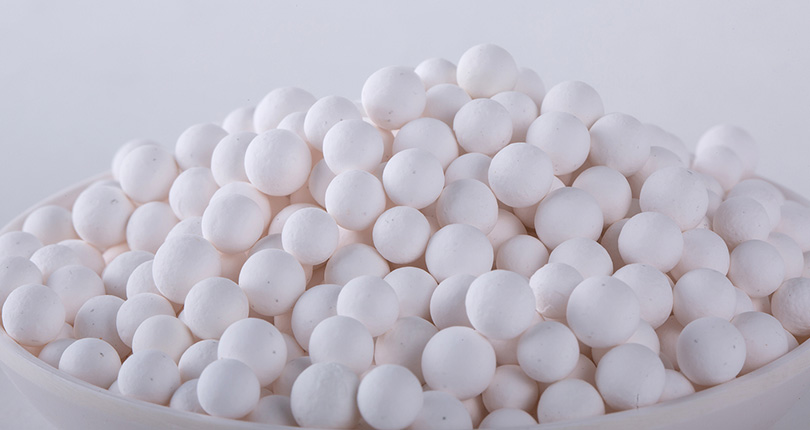
Activated alumina balls are highly porous, thermally stable forms of aluminum oxide (Al₂O₃) with a large specific surface area . They serve as desiccants, adsorbents, and catalyst carriers in various industrial applications, including gas drying, air separation, water purification, fluoride removal, and hydrogen peroxide production. Their performance relies on selective adsorption via surface hydroxyl groups and pore structure, and they can be regenerated by heating, making them cost-effective and reusable
| Size | 0.5-1mm、2-4mm、3-5mm、4-6mm、8-10mm、10-12mm |
| Al2O3 | ≥92% |
| Na2O | ≥1.0% |
| Water absorption | ≥50 |
| Pore volume | ≥ 0.38 |
| Specific surface area | ≥ 300 |
| Wear rate | ≤0.6 |
High specific surface area
Good adsorption properties
Excellent high temperature resistance
Free sample accepted
A nut factory in Turkey purchased 12 tons of activated alumina balls to absorb the remaining water in the production and packaging process of the product, which improved the quality and taste of the product and extended the shelf life.
An chemical manufacturer employed 5000kg of activated alumina balls as a high-performance catalyst support/carrier . The alumina's properties contributed to excellent reaction stability and efficiency in their chemical synthesis processes, demonstrating its effectiveness as a robust catalyst substrate.
A Canadian water treatment plant implemented 16 tons of activated alumina adsorption media , specifically for fluoride ion removal (defluoridation). This application successfully resolved issues of excessive fluoride contamination, bringing treated water into compliance with safety standards through effective adsorption.
A Japanese water treatment facility used 6 tons of activated alumina balls to catalyze the decomposition of hydrogen peroxide (H2O2). This process accelerated oxygen release, enabling oxidation of organic and inorganic impurities, thereby enhancing overall water purification and quality.
An American research laboratory procured 1 ton of activated alumina balls for use as a stable catalyst support substrate. The material demonstrated excellent stability and a high kneading rate during catalyst preparation, proving valuable for R&D in catalyst development.
A food production plant applied 22 tons of activated alumina desiccant balls for drying and removing residual process water. This industrial drying solution successfully reduced product moisture content to meet stringent quality and safety specifications.
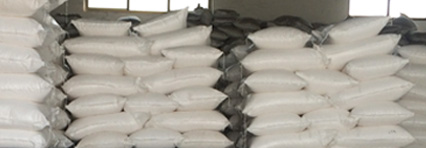
25Kg/Bag
Customized package